
By Brendan Casey
Before I dip into the song review, I need to get one thing off my chest.
There are times where I sit back and revisit the Rolling Stones pre-1973 discography and think to myself:
“Damn. They could do American rock & roll better than a lot of American bands”.
It may be true.
Once they got over their psychedelic-very-british-harpsichord-rainbow-string-section-overdubs–over-produced-shiny-LSD trip and returned to their roots (blues, soul and swingin’ rock AND roll) with Beggars Banquet in 1968, the Stones were back to churning out feel good, pedal to the metal, hair-in-the-wind, very American sounding rock & roll – especially in a time where America was infatuated with soft stuff like Tommy James & The Shondells, Jackson Browne and Jim Croce, or Brits like Bowie, Pink Floyd, The Faces, Led Zeppelin…the list of bands that aren’t American rock & roll go on.
Sure, their acid-stained psychedelic pop phase wasn’t a total wash, as they squeezed out unforgettable tunes like “Let’s Spend the Night Together” (1967), “Ruby Tuesday” (1967), “Out of Time” (1967 in the US), “Mother’s Little Helper” (1966), and “She’s a Rainbow” (1967) – but I could definitely go without ever listening to “Yesterday’s Papers” (1967), or “In Another Land” (1967) ever again.
But back to rock & roll. Come 1972, the Stones are at an all-time high, potentially at their pinnacle as a rock band, and all while battling deep drug addictions, growing egos, toxic relationships, and a move to France to avoid paying a pretty incredible amount of taxes back in England, (I’ll touch on all of this sometime), they pump out one of the greatest albums in rock & roll history, Exile on Main Street.
Remember when I said I was going to review a song? Here it is:
“Happy” – the 10th track on Exile on Main Street, was recorded sometime between July and November 1971 at Villa Nellcôte in France, the 16-room mansion in the French Riviera that guitarist, songwriter and riffmaster Keith Richards was leasing at the time (there have actually been rumors that the mansion was headquarters for the local Gestapo during the Nazi occupation of France during World War II, with swastikas decorating the heating vents in the basement).
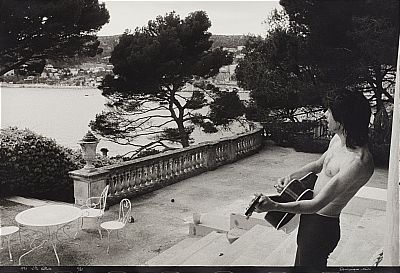
of Villa Nellcôte in the French Riviera / Photo by
Dominique Tarle
According to Keith in his 2010 biography Life, “Happy” was written and recorded remarkably quickly, as he recalled “We did that in an afternoon, in only four hours. At noon it had never existed. At four o’clock, it was on tape”.
Pretty impressive, huh?
“Happy” kicks off with an electric guitar riff that teases the chorus melody in the open-G tuning that Ry Cooder taught Keith, before repeating, this time backed by a trebled out guitar that sounds nearly like an organ, before dropping to the song’s simple but fitting slide guitar riff.
The rhythm of the track gives off a classic, thumping rock & roll feeling that Keith and the Stones had pretty much mastered in their songwriting since inception – except it isn’t Charlie Watts on drums, it’s Stones Producer Jimmy Miller. The song’s very major sound, sonically light high-end guitar parts, heavy thumping bass, and near-shouting lead vocal track (all recorded Keith himself) exuberates happiness that one could imagine should be pressed and squeezed out of a lifestyle like one in a huge mansion on the southern French coastline during the summer. But listen to the words in the verses…
“Well I never kept a dollar past sunset, It always burned a hole in my pants, Never made a school mama happy, Never blew a second chance”.
“Always took candy from strangers, Didn’t wanna get me no trade, Never want to be like papa, Working for the boss every night and day”.
“Never got a flash out of cocktails, When I got some flesh off the bone, Never got a lift out of Lear jets, When I can fly way back home”.
The song is pure 100% all-natural Keef Richards. He’s making money and eager to spend it, emphasizing his lifelong path of living in the now. He’s a rebel, he never wanted to live a cookie-cutter lifestyle. But he doesn’t just want the shiny, rich and famous lifestyle either.
Listen to the chorus.
“I need a love to keep me happy…”
You can hear Mick Jagger’s backup vocals support Keith for emphasis as we begin to see life through his eyes, as we really get the point of these thoughts he’s having. Despite the mansion, the jets, the drugs, the money, he’s realizing that the answer to having a good life and being happy is simple: love.
There’s also theories that the choice of using “I need a” is supposed to sound like “Anita”, referencing Anita Pallenberg, the Italian-German actress who was Keith’s girlfriend at the time, who he snagged from Brian Jones, which she apparently cheated on Keith with Mick around the time of the writing of the song, which…it’s all really complicated. It’s rockstar shit. We probably wouldn’t get it.
About halfway through the tune, Keith’s guitar tracks are met on the chorus with the massive brass horn sound of legendary rock & roll saxophonist and frequent Rolling Stones collaborator Bobby Keys (Keith’s birthday buddy whom he met down in Texas on an early Stones tour) along with trumpeter and trombonist Jim Price who had toured with Delaney & Bonnie and Joe Cocker’s Mad Dogs and Englishmen before appearing on Sticky Fingers, prior to Exile on Main Street.
The horns outline a major arpeggio, emphasizing the bright and exciting feel that “Happy” gives off. The song follows this route as it continues to repeat the chorus until the fade. The horns are blaring, the slide guitar is ripping, the bass and drums are thumping, and Keith and Mick are shouting away.
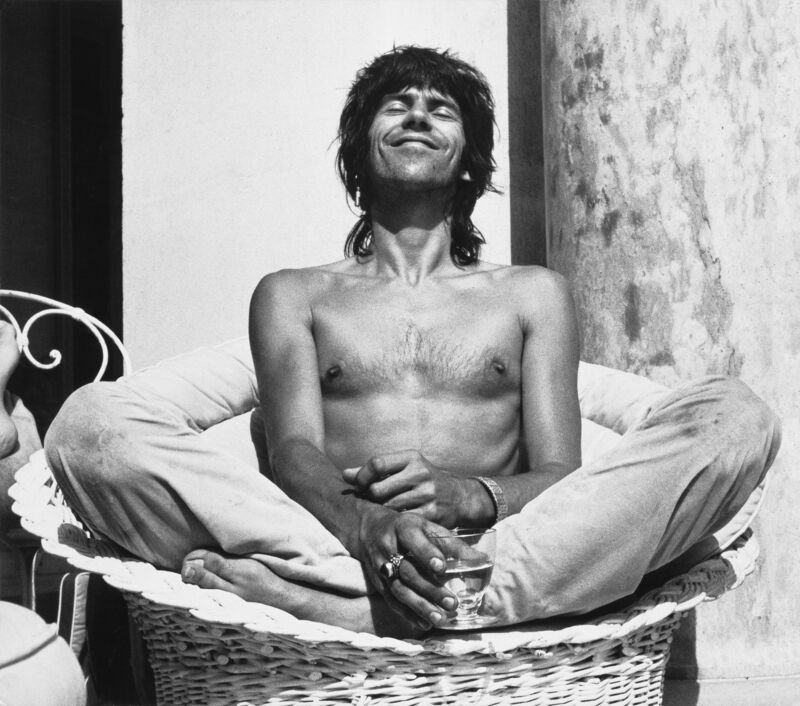
So, why exactly does “Happy” – though it contains some personal and potentially gloomy lyrics – feel so damn good to listen to?
Though I couldn’t find the original source, according to songfacts, Keith says (about “Happy”), “That’s a strange song, because if you play it you actually become happy, even in the worst of circumstances. It has a magical little bounce about it.” Keith also said “It was just one of those moments that you get that are very happy. And I can play it now and it gives you a lift. I don’t know why except for maybe the word”.
So you heard it from Keith himself. “Happy” is really just one of those special tunes that gives off special feelings. Personally, it’s the kind of tune that I envision myself flying down the road in my car with the windows down on a late spring – early summer evening. It might’ve even been the first song I listened to after finishing college, which for me, was a very happy moment indeed.
At its peak, “Happy” reached 22 on the Hot 100 in August of 1972, which makes it the sole Rolling Stones tune that Keith sang lead vocals on that charted the Hot 100. Not bad, not bad at all. Give it a listen. Feel the rhythm, hear the guitars, the shouting vocals, the deep bass and ripping horns. If you didn’t know any better, it could really make you wonder:
“Is this American rock & roll?”
 All Kindsa Music Mag
Leave a comment